
A door is no longer considered only a functional element; instead, it has become an important part of the overall interior design. Therefore, the surface, colour, pattern and texture of a door can significantly influence the character and appearance of a room. WPC Textured Doors are becoming an increasingly popular choice for modern homes, offices, hotels, apartments and commercial spaces.
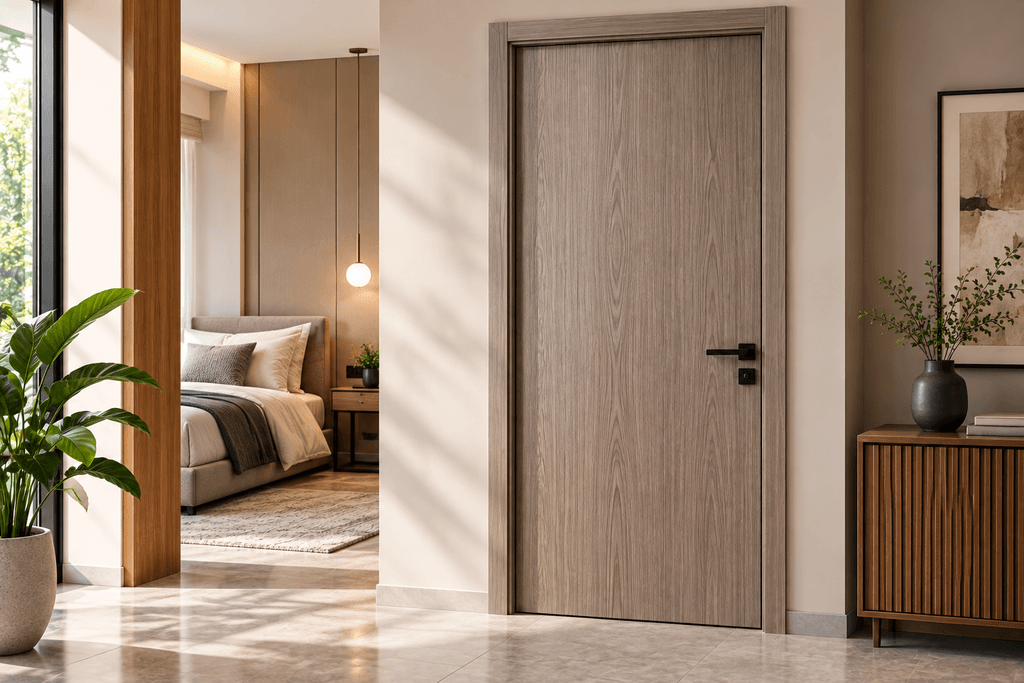
Moreover, textured WPC doors offer a distinctive alternative to completely flat door surfaces. They can feature grooves, waves, wood-grain effects, geometric patterns, carved designs and other decorative finishes. As a result, they can add depth and visual interest while maintaining the characteristic advantages associated with WPC.
At the same time, the wide range of available textures makes it easier to coordinate a door with different interior styles. Whether the goal is a simple modern look, a warm wood-inspired appearance or a more decorative statement, WPC Textured Doors provide multiple design possibilities for residential as well as commercial applications.
Unlike a simple printed pattern, a textured door can also create variation in the way light falls across its surface. Depending on the manufacturing method, the texture may be moulded, embossed, grooved, carved or formed into the surface.
For homeowners, architects, interior designers, builders and project developers, this opens up more possibilities when choosing doors for contemporary spaces.
What Are WPC Textured Doors?
WPC Textured Doors are doors made using Wood Plastic Composite (WPC) as the primary door material and finished with a decorative or tactile surface texture.
WPC is a composite material generally made using wood-based components and polymer materials. The exact composition, density, construction and performance can vary according to the manufacturing process and product specification.
What makes a WPC door a textured WPC door is the treatment of its surface.
Instead of having only a flat, plain finish, the surface may contain:
- Wood-grain patterns
- Vertical grooves
- Fluted lines
- Wave patterns
- Geometric designs
- 3D relief patterns
- Carved effects
- Nature-inspired designs
- Abstract patterns
- Minimal linear textures
The word texture is important because it can refer to a physical characteristic of the surface, not simply a printed image.
For example, a door may have a visual wood-grain appearance created through decorative finishing, while another may have actual grooves or raised areas that can be felt by hand.
Therefore, textured WPC doors should not automatically be confused with digitally printed WPC doors. Digital printing mainly refers to how a visual design is applied, whereas physical texturing involves creating variation in the surface itself. Some products can combine both approaches.
Why Are Textured WPC Doors Becoming Popular?
Interior design has gradually moved toward surfaces that offer more visual depth.
Completely flat surfaces can create a clean and simple appearance, but textures can add another dimension. A textured door can catch highlights and shadows differently throughout the day, making the surface appear more dynamic.
This makes textured WPC doors suitable for a wide variety of design styles.
A subtle linear texture can work well in a minimalist apartment. A wood-grain texture may complement a warm residential interior, while a bold geometric design can become a feature element in a modern office or hotel.
There is also growing interest in materials that offer an alternative to conventional wood products while still allowing designers to create attractive finishes.
WPC textured doors can therefore provide a combination of material functionality and surface design flexibility.
Another advantage is consistency. In a project with multiple doors, a manufactured textured design can help create a coordinated appearance across different rooms.
How Are WPC Textured Doors Made?
The exact manufacturing process depends on the WPC formulation, door construction, texture type and finishing system. However, a typical production process involves several important stages.
1. WPC Material Preparation
The process begins with preparation of the WPC material according to the required product specification.
The composition and manufacturing parameters can influence the density, strength, dimensional characteristics and overall performance of the finished door.
Material consistency is particularly important when producing textured doors because an uneven base can affect the final surface.
2. Door Panel or Profile Formation
The WPC material is processed into the required door component or panel.
Depending on the construction system, this may involve forming, moulding, extrusion, pressing, cutting or other manufacturing processes.
The objective is to create a stable base suitable for further machining and finishing.
3. Surface Preparation
Before creating the texture, the surface needs to be prepared appropriately.
A uniform surface helps the texture appear clean and consistent. Any required preparation, sizing or machining is carried out at this stage.
This step becomes especially important when the design contains fine grooves or detailed patterns.
4. Texture Creation
This is the defining stage of a WPC textured door.
The surface design can be created through different manufacturing approaches depending on the product. These may include moulded patterns, grooves, embossing, routing, carving or other methods of forming the surface.
The texture may be shallow and understated or deeper and more prominent.
For example, a linear design might use closely spaced grooves, while a decorative door could feature a larger 3D geometric pattern.
5. Finishing and Surface Treatment
Once the texture has been created, the surface may receive a suitable decorative finish.
Finishing can affect colour, appearance, surface feel and the visual definition of the texture.
Depending on the product, finishes may include solid colours, wood-inspired tones or other decorative effects.
The choice of finish should complement the texture. A very detailed pattern may be easier to appreciate with a finish that allows shadows and surface variation to remain visible.
6. Cutting and Edge Finishing
The door is then processed to its required dimensions.
Edges are finished carefully because they form an important part of the overall appearance and installation compatibility.
Accurate dimensions are especially important when doors are being produced for projects with standardized openings or matching door frames.
7. Quality Inspection
Before dispatch, the finished product should be checked for characteristics such as:
- Dimensions
- Surface finish
- Texture consistency
- Edge quality
- Visual defects
- Colour consistency
- Overall workmanship
The level of inspection may vary depending on the manufacturer and application.
8. Packing and Dispatch
After quality inspection, the finished doors are properly packed for transportation.
Packaging is particularly important for textured surfaces because edges and decorative areas should be protected during handling and shipment.
Key Benefits of WPC Textured Doors
The appeal of textured WPC doors comes from the combination of decorative possibilities and the characteristics associated with WPC construction.
Attractive and Premium Appearance
Texture can give a door more visual depth than a plain surface.
Grooves, waves, geometric patterns and wood-inspired designs can create a more sophisticated appearance, particularly when coordinated with the surrounding interior.
Wide Variety of Designs
One of the major advantages of textured WPC doors is design flexibility.
Depending on manufacturing capabilities, designs can range from simple vertical lines to detailed decorative patterns.
This makes it easier to select a door according to the personality of the space.
Modern Interior Compatibility
Textured surfaces work particularly well with modern interior trends.
A fluted door, for instance, can complement contemporary furniture and wall panels, while a wood-grain texture can introduce warmth into a minimalist room.
Moisture Resistance
WPC is generally valued for its resistance to moisture compared with many conventional wood-based products.
However, the actual performance of a door depends on its formulation, construction, finishing, edge treatment and installation.
For areas exposed to moisture, the complete door system should be considered rather than the material name alone.
Termite Resistance
WPC-based construction can offer advantages in environments where termites are a concern, depending on the formulation and product design.
As with other performance characteristics, it is important to check the specific product specification rather than assuming every WPC door has identical resistance.
Low Maintenance
A properly finished textured WPC door can be relatively easy to maintain as part of normal interior cleaning.
The correct cleaning method depends on the surface finish. Abrasive materials or aggressive chemicals should not be used unless they are specifically recommended for the product.
Long-Term Durability
The durability of a WPC textured door depends on several factors, including material composition, door construction, texture design, surface treatment, installation and usage conditions.
A well-manufactured product with an appropriate finish can be suitable for long-term interior applications.
Design Flexibility
Texture provides another layer of design freedom.
Instead of choosing only between plain colours, designers can select a surface that creates lines, shadows, movement or decorative contrast.
Suitable for Residential and Commercial Projects
Textured WPC doors can be considered for homes, apartments, offices, hotels, commercial spaces and institutional environments, subject to the project requirements and product specifications.
WPC Textured Door Designs
Design is one of the strongest reasons to consider textured WPC doors.
Wood Grain Texture
Wood-grain textures create a warm and natural visual effect.
They can suit bedrooms, living spaces, offices and hospitality interiors where a wood-inspired appearance is desired without relying on a completely traditional wooden surface.
Fluted and Vertical Groove Texture
Vertical grooves create a strong sense of height and order.
This design can work particularly well in contemporary interiors, especially when coordinated with fluted wall panels or other vertical architectural elements.
Wave Texture
Curved or flowing grooves can make the surface appear softer and more dynamic.
Wave textures are suitable for feature doors where the objective is to introduce movement without using an extremely complex pattern.
Geometric Texture
Geometric textures use straight lines, angles, blocks or repeated shapes.
They are often suitable for modern homes, offices, retail spaces and commercial interiors.
3D Texture
A 3D textured WPC door can create greater variation in depth.
Light and shadow become an important part of the design, making the door more visually prominent.
Carved Texture
Carved designs can reproduce ornamental, abstract or artistic patterns.
They may be used where the door itself is intended to function as a decorative element.
Leaf and Nature-Inspired Texture
Leaves, branches and organic shapes can create a softer decorative appearance.
These designs may work especially well in hospitality spaces and residential interiors influenced by natural materials.
Minimal Linear Texture
Minimal lines can add character without making the door visually dominant.
This is a good option for interiors where simplicity is more important than elaborate decoration.
Modern Abstract Texture
Abstract designs can create a stronger statement.
They can include irregular forms, asymmetrical lines and unconventional surface patterns for projects with a more distinctive design direction.
Custom Textured Designs
For specific projects, custom texture development may also be possible depending on manufacturing capabilities, technical feasibility and order requirements.
Custom designs can be useful when architects or interior designers want a coordinated surface across multiple elements of a project.
Applications of WPC Textured Doors
Home Entrance Doors
A textured WPC door can create a strong first impression at an entrance.
Wood-grain, geometric and bold 3D textures can work particularly well where the entrance is designed as a visual focal point.
Bedroom Doors
For bedrooms, designers may prefer subtle patterns such as wood grain, vertical grooves or light linear textures.
Bathroom Doors
WPC doors can be considered for moisture-prone interior areas, subject to the specific product construction and installation requirements.
A textured finish can also add visual interest to an otherwise simple bathroom entrance.
Kitchen and Utility Areas
Practical surfaces with simple textures can be suitable for utility areas where easy maintenance and a coordinated interior appearance are important.
Office Doors
Geometric and linear textured designs can complement contemporary offices and professional spaces.
Hotel Projects
Hotels often require doors that contribute to a consistent design language throughout guestrooms and common areas.
Textured WPC doors can provide a range of coordinated aesthetic options.
Apartments and Residential Projects
For multi-unit developments, consistent door designs are important.
Textured WPC doors can be produced in selected patterns and finishes for multiple rooms or units, depending on the project specification.
Commercial Buildings
Retail stores, offices, studios and other commercial spaces can use textured doors as part of a broader branding and interior design concept.
Institutional Projects
Educational, healthcare and institutional buildings may also use WPC-based door solutions where the required product specification is suitable for the project.
How to Choose the Right WPC Textured Door Design
Choosing a texture should begin with the overall design of the room.
Consider the colour of the walls, flooring, furniture and other architectural elements.
A bold door can become a statement piece, but a highly decorative texture may not be suitable where the rest of the interior is already visually complex.
Also consider:
- Door location
- Door size
- Door thickness
- Texture depth
- Surface finish
- Frame compatibility
- Hardware
- Quantity required
- Customization requirements
- Project specifications
For minimalist spaces, subtle textures often work well. For feature walls and premium interiors, more prominent 3D or geometric textures may create a stronger visual impact.
WPC Textured Doors vs Plain WPC Doors
| Feature | Plain WPC Door | Textured WPC Door |
|---|---|---|
| Surface appearance | Simple and clean | Decorative and detailed |
| Texture | Generally flat or subtle | Grooved, embossed, carved, fluted or 3D depending on design |
| Visual character | Minimal | More distinctive |
| Design options | Moderate | Broad range of surface patterns |
| Interior impact | Subtle | Stronger |
| Styling | Minimal and understated | Contemporary, decorative or premium |
Neither option is universally better.
A plain WPC door may be ideal for a clean, simple interior, while a textured WPC door may be preferable when surface design is an important part of the project.
Are WPC Textured Doors Waterproof and Termite Resistant?
This is one of the most common questions about WPC doors.
WPC generally offers good resistance to moisture compared with many conventional wood-based materials. However, it is not appropriate to assume that every WPC textured door has identical waterproofing performance.
Door construction, material formulation, joints, edges, surface treatment and installation all influence real-world performance.
The same principle applies to termite resistance.
WPC products can offer resistance to termite-related problems, but the exact performance should be confirmed from the product specification and manufacturing formulation.
Therefore, rather than relying on broad statements such as “100% waterproof” or “100% termite-proof,” it is better to evaluate the complete product specification.
WPC Textured Doors Price: What Determines the Cost?
There is no single fixed price for every WPC textured door.
The cost can vary according to:
- Door dimensions
- Thickness
- WPC grade or density
- Texture complexity
- Surface finish
- Design
- Door construction
- Frame
- Hardware
- Quantity
- Customization
- Packaging
- Transportation
- Installation
- Project requirements
A basic texture may require a different manufacturing process from an intricate 3D or carved design.
For bulk orders, project quantities and specifications can also affect the final quotation.
For an accurate WPC textured doors price, it is better to provide the required size, thickness, design, quantity and project details rather than relying on a generic market figure.
Why Choose Maica Group for WPC Textured Doors?
Maica Group focuses on the manufacturing and supply of WPC doors and door frames, with solutions designed for residential, commercial and project requirements.
For customers looking specifically for WPC textured doors, the value is not only in having a decorative surface. The complete product needs to be considered, including the WPC construction, dimensional accuracy, finishing, texture consistency and compatibility with the required installation.
Maica Group can cater to requirements such as:
- WPC textured door designs
- Different decorative surface options
- WPC door frames
- Customized project requirements
- Bulk door requirements
- Builder and contractor projects
- Dealer and distributor enquiries
- Residential applications
- Commercial and institutional requirements
- PAN-India supply
For large projects, consistency across multiple doors is especially important. A coordinated texture, finish and specification can help maintain a uniform appearance throughout the development.
Customers can discuss their required door dimensions, texture preference, quantity, frame requirements and project application with the Maica Group team to identify an appropriate solution.
Why Textured WPC Doors Are Suitable for Modern Projects
Modern architecture increasingly treats surfaces as part of the overall design language.
Walls, ceilings, furniture, partitions and doors are often selected to work together rather than independently.
In this environment, textured WPC doors offer another opportunity to introduce visual detail.
A vertical groove pattern can complement architectural lines. A wood-grain surface can add warmth. A geometric design can create contrast. A subtle texture can add depth without dominating the room.
For architects, designers and builders, this flexibility can be particularly valuable in projects where repeated design elements need to remain visually consistent.
For homeowners, it provides more options to move beyond completely plain doors.
Frequently Asked Questions About WPC Textured Doors
1. What is a WPC textured door?
A WPC textured door is a WPC door featuring a decorative or tactile textured surface, such as wood grain, grooves, geometric patterns, fluting, carving or 3D designs.
2. What is the difference between textured and plain WPC doors?
A plain WPC door generally has a relatively simple surface, while a textured WPC door incorporates decorative surface detailing for greater visual and tactile character.
3. Are WPC textured doors waterproof?
WPC generally provides good moisture resistance, but actual performance varies according to material composition, construction, finishing and installation. Product-specific specifications should always be checked.
4. Are WPC textured doors termite resistant?
WPC products can provide resistance to termite-related problems depending on the formulation and construction. The specific product specification should be consulted.
5. What types of textures are available in WPC doors?
Common design categories include wood grain, fluted, vertical grooves, waves, geometric patterns, 3D surfaces, carved designs, nature-inspired textures and minimal linear patterns.
6. Can WPC textured doors be customized?
Customization may be possible depending on the manufacturer, design complexity, dimensions, production method and project quantity.
7. Are textured WPC doors suitable for bathrooms?
They can be considered for bathroom applications where the product specification, construction and installation are suitable for the moisture conditions.
8. Can textured WPC doors be used for bedrooms?
Yes. Wood-grain, fluted, linear and subtle decorative textures can be particularly suitable for bedroom interiors.
9. Are WPC textured doors suitable for hotels and commercial projects?
Yes. They can be considered for hotels, offices, apartments, commercial buildings and other projects where the required specifications are met.
10. How are WPC textured doors manufactured?
Depending on the product, production can involve WPC material preparation, panel formation, surface preparation, moulding or machining of the texture, finishing, cutting, edge treatment, quality inspection and packing.
11. How do I maintain a textured WPC door?
Regular cleaning with appropriate materials is generally sufficient. Avoid abrasive cleaners or harsh chemicals unless specifically recommended for the particular finish.
12. What affects WPC textured door price?
Size, thickness, WPC grade or density, texture complexity, finish, construction, frame, hardware, quantity, customization, transportation and project requirements can all influence the price.
13. Can WPC textured doors be supplied with matching frames?
Yes, WPC door frames can be supplied as part of a door solution, subject to the required frame specification and project requirements.
14. Are WPC textured doors available for bulk projects?
Yes. Textured WPC doors can be considered for bulk residential, commercial, builder, contractor, hospitality and other project requirements, subject to design and production specifications.
Conclusion
WPC Textured Doors bring together material technology and surface design in a way that can make a functional door an important part of an interior.
From wood-grain and fluted surfaces to geometric, carved and 3D patterns, textured WPC doors provide a broad range of visual possibilities. They can be used in homes, apartments, offices, hotels, commercial buildings and larger projects where appearance and material performance both matter.
The most suitable door depends on the application, required specifications, texture, finish, size, installation conditions and project requirements.
For customers exploring premium WPC textured doors, modern designs, customized requirements or bulk project solutions, Maica Group offers WPC doors and door-frame solutions for a range of applications.
Explore WPC textured doors and door frame designs with Maica Group and discuss your requirements for residential projects, commercial spaces, builders, contractors, dealers, distributors and bulk orders.
For more updates, follow us: