
A beautifully designed interior does not always need solid walls or expensive decorative elements. A CNC Jali panel can create a stylish partition, add privacy, introduce patterns and enhance the overall appearance of a space while keeping the area visually open.
Today, CNC Jali panels are used in homes, offices, hotels, restaurants, retail spaces and other commercial interiors. They are available in a wide range of patterns, materials, thicknesses, colours and finishes, making them suitable for both modern and traditional interior designs.
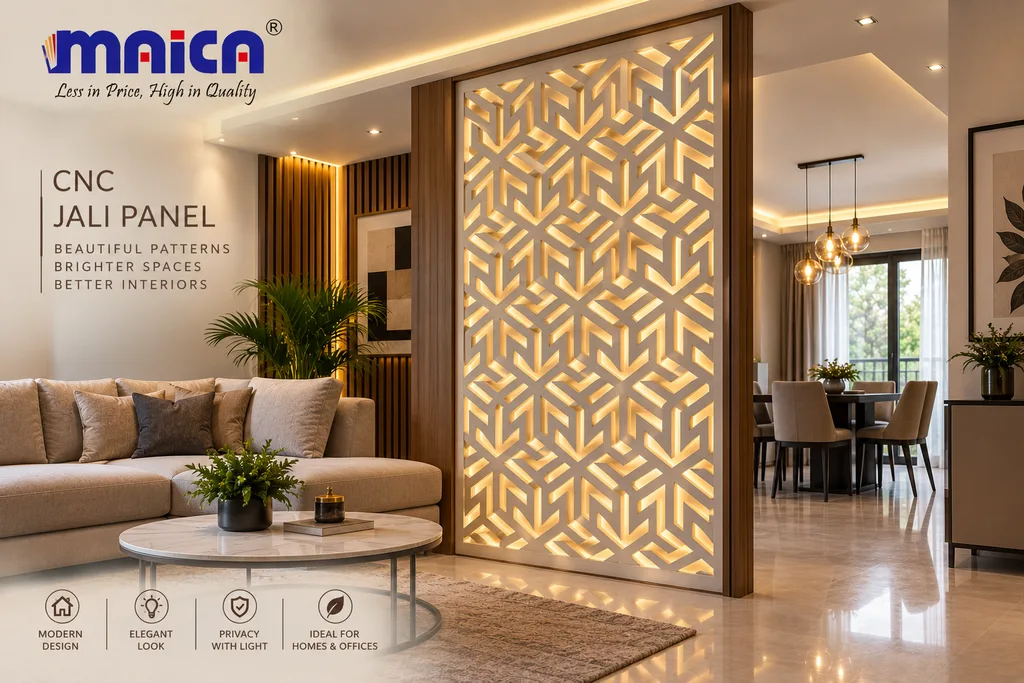
But what exactly is a CNC Jali panel? Which material should you choose? Where can it be used? How much does a CNC Jali panel cost? And how do you select the right design?
This complete guide explains the basics of CNC Jali panels, their materials, applications, design options, price factors, maintenance and important points to consider before buying.
What Is a CNC Jali Panel?
A CNC Jali panel is a decorative panel with precisely cut patterns manufactured using a Computer Numerical Control (CNC) machine.
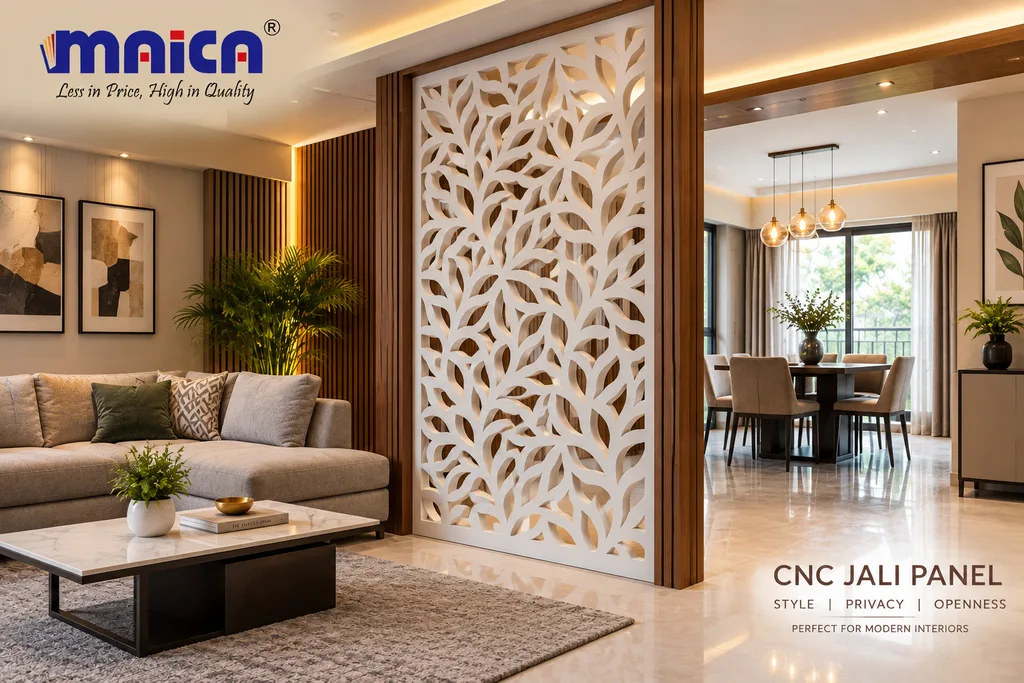
The design is first created digitally using CAD or vector-based design software. The digital design is then converted into machine instructions. A CNC machine follows these instructions to cut the selected pattern into a suitable sheet or panel.
Depending on the material and manufacturing process, CNC cutting can create intricate geometric, floral, traditional, abstract and customised patterns.
A CNC Jali panel can be used as:
- A room divider
- A decorative wall panel
- A privacy screen
- A pooja room partition
- A TV-unit feature
- A ceiling decoration
- A staircase screen
- An entrance feature
- An office partition
- A commercial interior element
The final appearance depends on the design, material, thickness, colour, surface finish and installation method.
How Is a CNC Jali Panel Made?
The manufacturing process generally involves several stages.
1. Design Selection
The process begins with selecting an existing design or developing a customised pattern.
The design should be suitable for the required panel size and material. Very intricate patterns may require modifications to maintain adequate strength between the cut sections.
2. Digital Design and CAD Drawing
The selected pattern is converted into a digital drawing.
Dimensions, cut-outs, borders and other design elements are checked before production.
This digital process allows manufacturers to reproduce the same design across multiple panels with consistent dimensions.
3. Material Selection
The appropriate material is selected according to the application.
Common options include:
- PVC
- WPC
- MDF
- Natural wood
- Aluminium
- Steel
- Other suitable sheet materials
Material selection is particularly important when the panel will be exposed to moisture, sunlight or heavy usage.
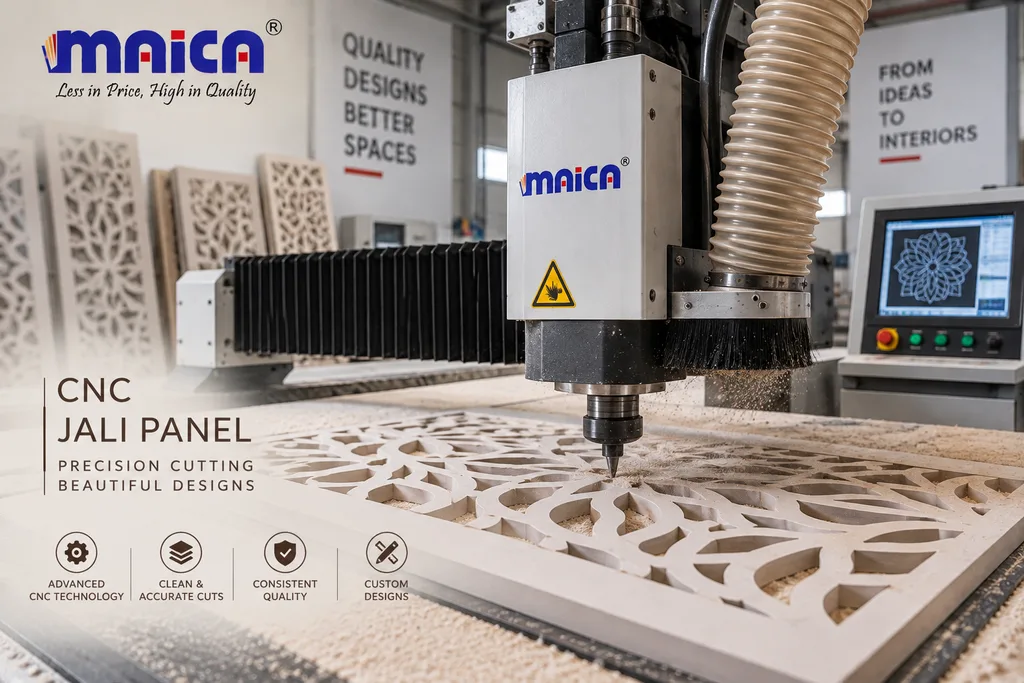
4. CNC Cutting
The prepared digital file is loaded into the CNC machine.
The machine follows the programmed toolpath and cuts the design into the selected sheet.
5. Finishing
After cutting, the panel may undergo additional finishing such as:
- Sanding
- Painting
- Polishing
- Lamination
- Edge finishing
- Surface coating
The finishing method depends on the material and desired appearance.
6. Installation
The finished Jali panel is then installed using an appropriate frame, fixing system, adhesive or hardware depending on the application.
For large partitions or areas requiring structural support, installation should be planned according to the panel’s weight and intended use.
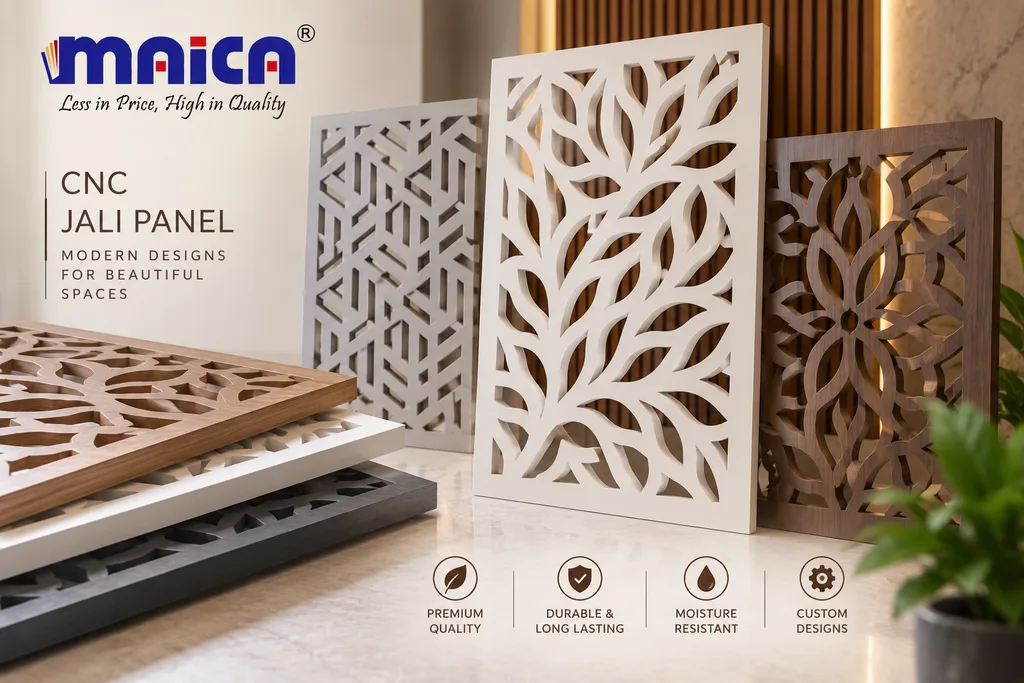
Types of CNC Jali Panels by Material
The material has a major impact on the appearance, durability, maintenance and application of a Jali panel.
PVC CNC Jali Panels
PVC Jali panels are commonly considered for interior applications where moisture resistance and easy maintenance are important.
They can be used for:
- Room partitions
- Decorative walls
- Pooja areas
- Ceiling features
- TV units
- Commercial interiors
PVC is particularly useful in applications where occasional moisture exposure may occur, although the suitability of the specific product should always be confirmed with the manufacturer.
WPC CNC Jali
WPC, or Wood Plastic Composite, combines wood-based material with polymer components.
A WPC CNC Jali panel can provide a wood-inspired appearance while offering properties associated with composite materials.
Common applications include:
- Living room partitions
- Decorative screens
- Pooja room partitions
- Feature walls
- Commercial interiors
- Architectural decoration
The performance of WPC varies according to its composition, density, thickness and manufacturing specifications.
MDF CNC Jali Panels
MDF is a popular material for indoor decorative applications because it has a smooth surface and can be finished in various colours.
MDF CNC Jali panels can be used for:
- Living room partitions
- Bedroom decoration
- TV-unit backgrounds
- Decorative wall panels
- Pooja room screens
- Ceiling features
MDF is generally better suited to indoor applications unless the particular product has been specifically engineered and finished for other conditions.
Wooden CNC Jali
Natural wood can provide a warm and premium appearance.
Wooden Jali panels are often selected for interiors where natural grain, texture and traditional aesthetics are important.
However, wood requires appropriate finishing and maintenance according to the surrounding environmental conditions.
Metal CNC Jali
Metal Jali panels can be manufactured using materials such as aluminium, stainless steel, mild steel or brass.
Depending on the metal and protective finish, they may be considered for:
- Balconies
- Gates
- Exterior screens
- Staircase areas
- Commercial spaces
- Feature walls
For outdoor applications, the selected metal and surface treatment should be appropriate for the local environmental conditions.
Popular CNC Jali Panel Designs
The design of a Jali panel can completely change the appearance of a room.
Geometric CNC Jali Panel Designs
Geometric designs use shapes such as circles, squares, diamonds, hexagons, lines and repeating patterns.
These designs work particularly well in:
- Modern homes
- Minimalist interiors
- Offices
- Contemporary restaurants
- Commercial spaces
A geometric CNC Jali panel can create a clean architectural appearance without making the partition visually heavy.
Floral CNC Jali Panel Designs
Floral designs introduce softer decorative elements.
They can be used in traditional, contemporary and transitional interiors.
Floral patterns are suitable for:
- Living rooms
- Pooja rooms
- Bedrooms
- Decorative walls
- Entrance areas
Mandala CNC Jali Panel Designs
Mandala patterns are popular for decorative walls and spiritual spaces.
A backlit mandala CNC Jali panel can create an attractive focal point in a pooja room, meditation area or feature wall.
Traditional Indian Jali Designs
Traditional designs may include lotus-inspired patterns, arches, ornamental motifs and other elements influenced by Indian architecture.
These designs can work particularly well in:
- Pooja rooms
- Entrances
- Hotels
- Traditional homes
- Heritage-inspired interiors
Abstract CNC Jali Panel Designs
Abstract patterns are suitable for modern interiors where you want something unique without relying on traditional floral or geometric motifs.
Custom patterns can also be developed according to the project’s dimensions and visual theme.
Where Can You Use a CNC Jali Panel?
One of the biggest advantages of CNC Jali panels is their versatility.
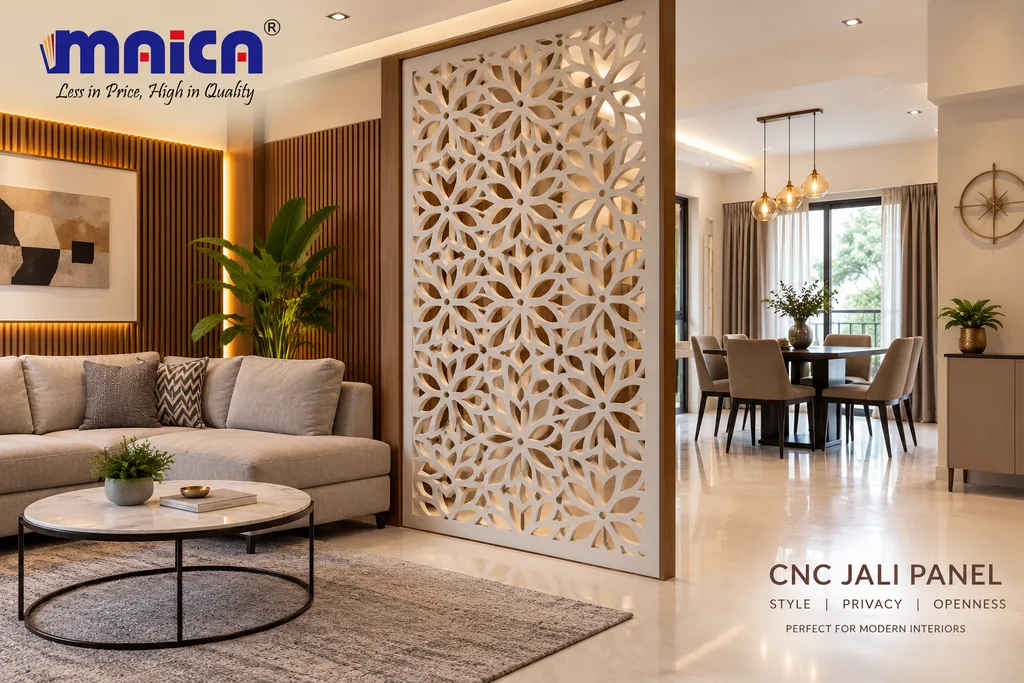
CNC Jali Panel for Living Room Partition
A CNC Jali partition can separate a living room from a dining area without constructing a solid wall.
The open pattern maintains visual connection between the spaces while creating a clear division.
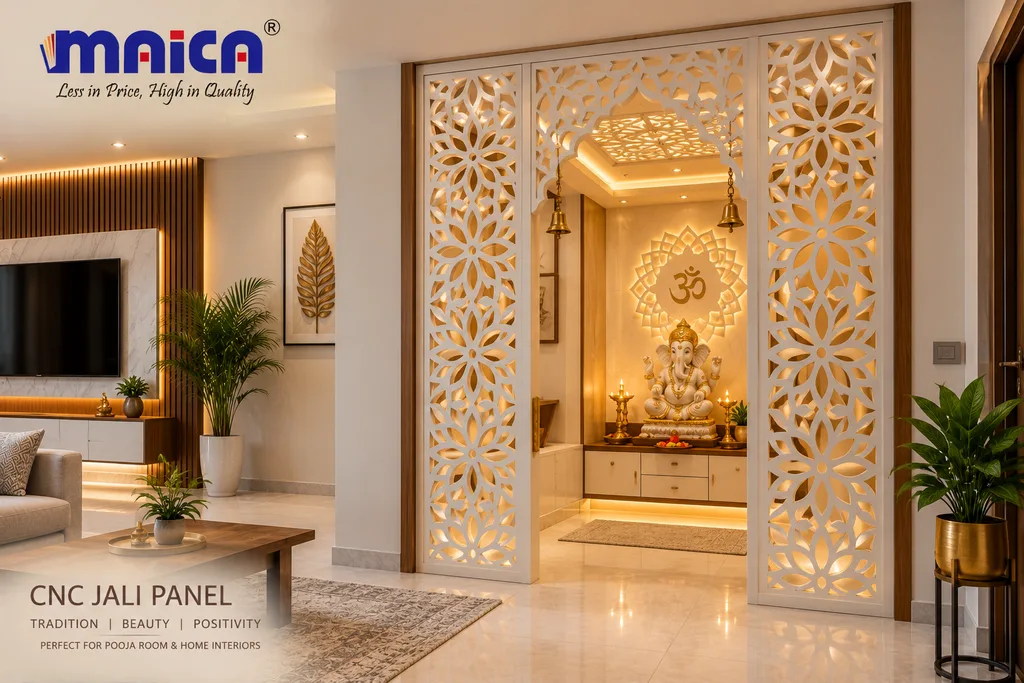
CNC Jali Panel for Pooja Room
A Jali panel can be used at the entrance or as a partition for a pooja room.
Floral, lotus, mandala and traditional Indian patterns are popular choices for these spaces.
CNC Jali Panel for Bedroom
A decorative Jali can separate a dressing area, study corner or sleeping space.
It can also be used as a decorative background behind selected furniture.
CNC Jali Panel for TV Unit
A Jali panel can be incorporated into a TV unit or feature wall to create a layered appearance.
Backlighting can further highlight the pattern.
CNC Jali Panel for Staircase
A CNC panel can function as a decorative staircase screen or visual divider.
However, where the panel is being used as a guard or safety element, structural and safety requirements must be considered separately.
CNC Jali Panels for Office
CNC panels can divide workspaces, reception areas and cabins while maintaining a more open appearance than solid partitions.
CNC Jali Panels for Balcony
Depending on the selected material and product specifications, Jali panels can be used for decorative balcony screening.
Outdoor applications require careful material and finish selection because of exposure to sunlight, rain and temperature changes.
Benefits of Using a CNC Jali Panel
1. Decorative and Functional
A CNC Jali panel can serve both a decorative and practical purpose.
It can divide spaces while also becoming an architectural feature.
2. Allows Light to Pass Through
The cut-out pattern allows light to pass through the panel.
When used near a window or light source, the pattern can also create interesting shadows.
3. Maintains Visual Openness
Unlike a solid wall, a Jali panel can separate spaces without completely blocking visibility.
4. Wide Range of Designs
CNC technology allows manufacturers to produce many different patterns, from simple geometric designs to intricate decorative motifs.
5. Customisable
Depending on the manufacturer and material, panels can be customised according to size, design and finish.
6. Suitable for Different Interior Styles
A CNC Jali panel can be designed for modern, minimalist, traditional, luxury or contemporary interiors.
7. Can Be Combined With Lighting
Backlighting can make the cut-out design more prominent and create a dramatic visual effect.
CNC Jali Panel Price: What Determines the Cost?
The CNC Jali panel price is not determined by size alone.
Several factors can influence the final quotation:
- Material
- Thickness
- Panel dimensions
- Design complexity
- Cutting time
- Finish
- Colour
- Customisation
- Quantity
- Installation
- Packaging
- Transportation
For example, Maica Group currently lists its standard 18 mm CNC Jali at ₹150 per sq. ft. on its website, while the final price can vary according to size, finish and design. Maica Group CNC Jali
Therefore, buyers should avoid comparing panels only by the per-square-foot price.
Two panels with identical dimensions can have different prices because of differences in material, thickness, design complexity and finishing.
For an accurate quotation, provide the supplier with:
- Panel width
- Panel height
- Material
- Thickness
- Design reference
- Quantity
- Finish or colour
- Installation requirements
- Delivery location
How to Choose the Right CNC Jali Panel
Selecting the right panel involves more than choosing an attractive design.
Consider the Application
First decide where the panel will be installed.
A living-room partition has different requirements from a balcony screen or a commercial exterior.
Consider Privacy
If privacy is important, choose a pattern with less open area.
If you want maximum visual openness, a more open design may be appropriate.
Match the Interior
The pattern should complement the furniture, wall colour, flooring and overall interior style.
Select the Right Material
Consider:
- Moisture
- Sunlight
- Cleaning
- Temperature
- Expected usage
- Location
- Required strength
Check Thickness
The appropriate thickness depends on the material, dimensions and application.
A large freestanding partition may require different specifications from a small decorative wall panel.
Think About Maintenance
Highly intricate patterns have many corners and openings where dust can accumulate.
For high-dust environments, a moderately open design may be easier to clean.
CNC Jali Panel Maintenance Tips
Regular maintenance can help preserve the appearance of your decorative panel.
Dust Regularly
Use a soft microfiber cloth, feather duster or soft brush.
Clean Detailed Areas Carefully
Small openings can collect dust. A soft brush can help reach difficult areas without damaging the finish.
Avoid Harsh Chemicals
Use cleaning products suitable for the particular material and finish.
Avoid Excessive Water
Cleaning requirements vary by material.
PVC and suitable WPC products may tolerate moisture better than MDF or untreated wood, but the manufacturer’s cleaning instructions should always be followed.
CNC Jali Panel vs Solid Wall Partition
A solid wall provides complete separation, while a CNC Jali panel provides partial visual separation.
| Feature | CNC Jali Panel | Solid Wall |
| Visual separation | Partial | Complete |
| Light transmission | Possible | Generally blocked |
| Airflow | Can be maintained | Usually blocked |
| Decorative potential | High | Depends on finishing |
| Custom patterns | Available | Limited |
| Openness | Higher | Lower |
| Installation | Depends on system | Usually more construction work |
The right option depends on the purpose of the partition, privacy requirements and overall interior design.
Things to Check Before Buying a CNC Jali Panel
Before placing your order, ask the manufacturer:
What Material Is Used?
Confirm whether the panel is PVC, WPC, MDF, wood, metal or another material.
What Is the Thickness?
The thickness should be clearly mentioned in the quotation.
Is the Design Suitable for the Size?
Some patterns need modification when scaled to very large or small dimensions.
What Finish Is Included?
Confirm whether painting, lamination, polishing or another finish is included.
Is Installation Included?
Manufacturing and installation may be separate services.
Is It Suitable for Outdoor Use?
Never assume that every CNC Jali panel is suitable for outdoor installation.
Confirm the material, coating and environmental suitability with the manufacturer.
Why Choose a CNC Jali Panel for Modern Interiors?
Modern interiors increasingly use flexible ways to divide spaces rather than relying only on solid walls.
A CNC Jali panel fits this approach by providing decorative separation while allowing some light, airflow and visual connection to remain.
It can transform an ordinary partition into a design element.
From a minimalist geometric screen to an intricate traditional pattern, the design possibilities are extensive.
The key is to select the right material, pattern, thickness and finish for the intended application.
Frequently Asked Questions About CNC Jali Panels
What is a CNC Jali panel?
A CNC Jali panel is a decorative panel manufactured using computer-controlled cutting technology. A digital design is converted into machine instructions and cut into materials such as PVC, WPC, MDF, wood or metal.
What is CNC Jali cutting?
CNC Jali cutting is the process of using a computer-controlled CNC machine to cut a programmed decorative pattern into a sheet or panel.
Which material is best for a CNC Jali panel?
There is no single material that is best for every application. PVC and suitable WPC products may be considered where moisture resistance and easy maintenance are important, while MDF and wood are commonly selected for indoor decorative applications. Metal may be suitable for specific exterior or demanding applications.
Can a CNC Jali panel be customised?
Yes. Depending on the manufacturer and material, CNC Jali panels can be customised according to the required dimensions, design and finish.
Can a CNC Jali panel be used as a room divider?
Yes. CNC Jali panels are commonly used as decorative room dividers between living rooms, dining areas, offices and other spaces.
Can CNC Jali panels be used for a pooja room?
Yes. CNC Jali panels can be used for pooja-room entrances, partitions and decorative backgrounds. Floral, mandala, lotus and traditional Indian patterns are popular choices.
What is the price of a CNC Jali panel?
The price depends on material, thickness, size, design complexity, finish, quantity and other requirements. Maica Group currently lists a standard 18 mm CNC Jali at ₹150 per sq. ft., while the final price can vary according to size, finish and design.
How do I clean a CNC Jali panel?
Regular dusting with a soft microfiber cloth, feather duster or soft brush is generally suitable. Always follow the cleaning instructions appropriate for the specific material and finish.
Can CNC Jali panels be used outdoors?
Some CNC Jali panels can be suitable for outdoor applications, but this depends on the material, finish, environmental exposure and product specifications. Always confirm outdoor suitability with the manufacturer before installation.
Does a CNC Jali panel block light?
No, the cut-out areas allow light to pass through. However, the amount of light and visibility depends on the design’s open area, pattern density and installation position.
Can CNC Jali panels be backlit?
Yes. Backlighting can be installed behind suitable CNC Jali panels to highlight the pattern and create a decorative lighting effect.
Where can CNC Jali panels be used?
CNC Jali panels can be used in living rooms, dining areas, pooja rooms, bedrooms, offices, restaurants, hotels, retail spaces, TV units, staircases, entrances and other interior applications.
Final Thoughts
A CNC Jali panel can add both functionality and visual appeal to residential and commercial interiors.
It can be used as a room divider, pooja-room screen, decorative wall, TV-unit feature, staircase screen, office partition or architectural element.
The best result comes from selecting the panel according to the actual application rather than choosing a design based only on appearance.
Before ordering, compare the material, thickness, dimensions, design, finish and installation requirements. Also ask the manufacturer whether the selected product is suitable for the environment where it will be installed.
If you are looking for customised CNC Jali panels for residential, commercial or architectural applications, Maica Group offers CNC Jali solutions from its manufacturing facility in Indore, Madhya Pradesh.
You can also explore Maica Group’s range of WPC doors and door frames for residential and commercial projects.
For More updates Follow us: