
All About Best PVC Kitchen Cabinets in 2026
The kitchen is the heart of every modern home. When designing a home or renovating an existing kitchen, choosing the right cabinetry is one of the most important decisions in 2026.
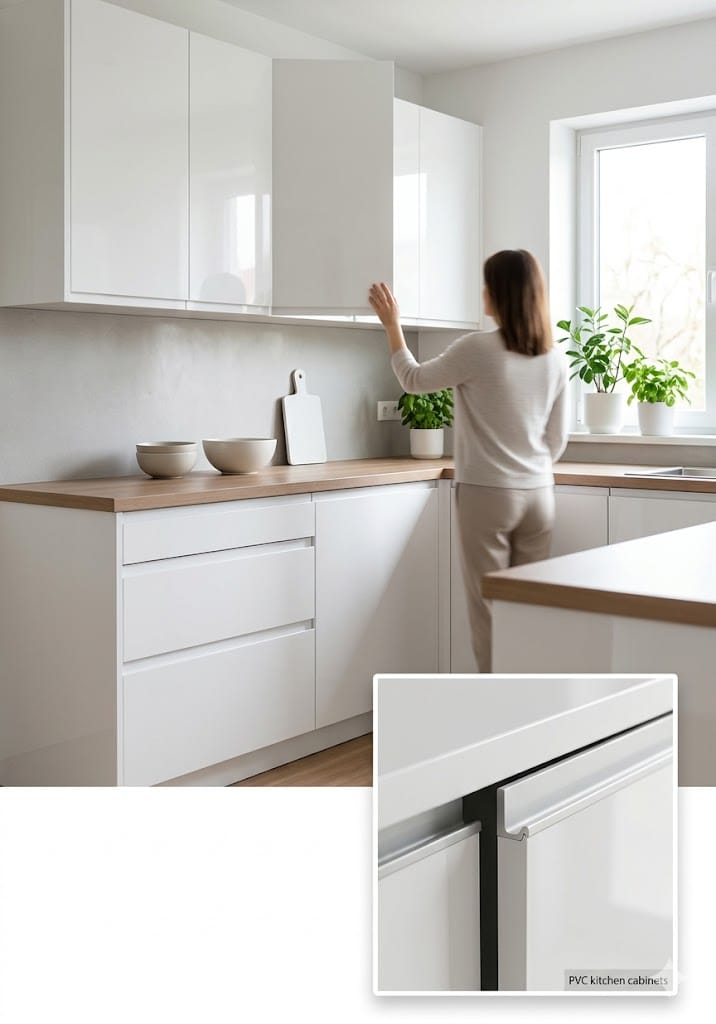
You will make. Today, traditional wood is no longer the only option. PVC kitchen cabinets have become incredibly popular due to their durability, clean look, and excellent water resistance.
If you are planning a kitchen project, this complete guide will cover everything you need to know about kitchen cabinets, types, 2026 trends, and market pricing.
1. What is a Kitchen Cabinet?
A kitchen cabinet is a built-in piece of furniture designed to store cooking utensils, food items, groceries, and tableware. They are usually integrated with household appliances like ovens, stoves, and refrigerators.
Kitchen cabinets define the entire layout of your cooking space. They are divided into three main parts:
- Base Cabinets: These sit on the floor and support your heavy kitchen countertop.
- Wall/Overhead Cabinets: These are mounted on the wall to store daily essentials at eye level.
- Tall Cabinets/Pantry Units: Vertical units used for bulk food storage or built-in appliances.
2. How are PVC Kitchen Cabinets Made?
Polyvinyl Chloride (PVC) is a high-strength synthetic plastic polymer. To make kitchen cabinets, manufacturers use large PVC foam boards.
These boards are made by expanding plastic under controlled heat, resulting in a lightweight yet incredibly rigid core. The sheets are cut into precise sizes using professional machinery. Next, workers use specialized plastic solvent glues, heavy-duty screws, and edge-banding tapes to seal the sides cleanly. The outer layer can be finished with decorative laminates, acrylic sheets, or high-gloss paint to give it a premium look.
3. What are the Benefits of PVC Kitchen Cabinets?
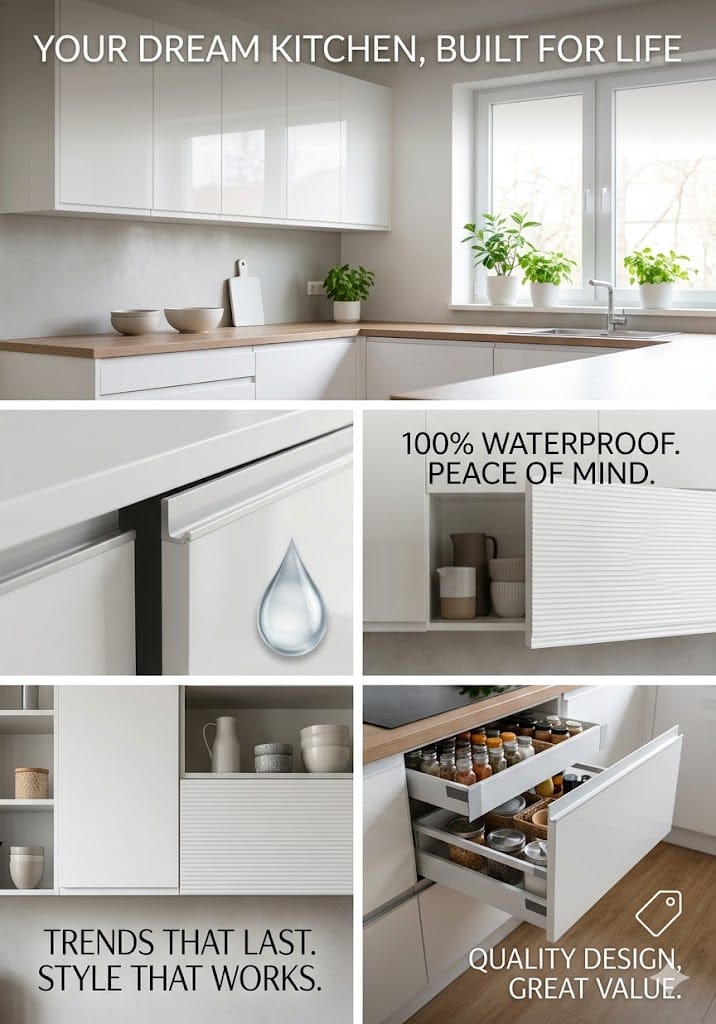
Choosing PVC over traditional commercial plywood or MDF brings massive practical advantages, especially for busy Indian households:
- 100% Waterproof: Kitchens deal with water spills, steam, and sink leaks. PVC does not absorb moisture, meaning it will never swell or rot.
- Termite and Pest Proof: Termites can destroy wooden kitchens within months. PVC is entirely plastic, so pests and termites cannot damage it.
- Fire Retardant: High-quality PVC boards do not ignite easily and help slow down the spread of fire.
- Low Maintenance: You do not need expensive polishes. A simple wipe down with a damp cloth and mild soapy water keeps them looking brand new.
- Eco-Friendly Alternative: Using PVC reduces the consumption of natural wood, saving trees.
4. What Types of Kitchen Cabinets Are Trending in 2026?
Monotone, boring kitchens are a thing of the past. In 2026, modern interior design focuses on minimalism and clever textures. Here is what is trending right now:
- Handle-less Minimalist Designs: Cabinets featuring push-to-open latches or sleek, hidden profile handles (G-profile) create a smooth, continuous look.
- Matte Finishes and Pastel Colors: While high-gloss was popular for years, super-matte finishes in soft colors like olive green, dusty rose, sage, and deep charcoal are dominating 2026 designs.
- Fluted and Reeded Textures: Homeowners are mixing flat PVC surfaces with textured panels (like fluted wall louvers) on overhead cabinets to add visual depth.
- Smart Storage Integration: Cabinets are now built specifically to house hidden pull-out spice racks, corner magic carousels, and soft-closing hydraulic lift-up doors.
5. How Many Types of Kitchen Cabinets Are Available?
When looking at materials, PVC kitchen cabinets are generally categorized into two distinct types:
- Hollow PVC Boards: These boards are completely hollow inside. They are very lightweight and highly affordable. However, they lack structural strength and can sag under heavy loads. They are only recommended for overhead lofts or light bathroom vanities.
- PVC Foam Boards (Solid): These are dense, thick sheets. They offer excellent screw-holding capacity and can easily bear the weight of heavy stone countertops and steel modular baskets. This is the only type you should use for kitchen base cabinets.
6. What is the Market Price for PVC Kitchen Cabinets?
The cost of a PVC modular kitchen depends on the size of your kitchen, the thickness of the boards used, and the hardware brands you select.
On average, the market price for custom PVC kitchen cabinetry ranges from Rs800* to Rs1,500* per square foot for the woodwork. A standard L-shaped modular PVC kitchen can cost anywhere between Rs80,000* to Rs1,800,00* including basic wire baskets and hinges*.
7. Can We Buy Directly or Order It to Be Made at Home?
You have two main ways to execute your kitchen project, and each has its pros and cons:
Option A: Readymade / Factory Direct Order (Highly Recommended)
You can visit a manufacturer or a direct dealer showroom, choose a layout, and provide your exact room measurements. The factory cuts, finishes, and edge-bands the PVC boards using high-end machinery. The flat-packed cabinets are then delivered to your home and assembled in just 2 to 3 days. This ensures a clean, flawless factory finish with zero dust in your house.
Option B: Carpentry Work at Home
You can buy raw PVC foam boards from a local distributor and hire a carpenter to cut and assemble them directly inside your house. While this allows you to monitor the work daily, hand-cutting PVC with manual saws can leave rough, uneven edges. It also creates a lot of plastic dust and takes weeks to complete.
Conclusion
If you want a long-lasting, stylish kitchen that requires absolutely zero stress regarding water damage or termites, PVC kitchen cabinets are your absolute best option. For the finest results, always opt for solid PVC foam boards and high-quality stainless steel hardware to ensure your drawers slide smoothly for decades.
Frequently Asked Questions (FAQs)
Q1: Do PVC kitchen cabinets smell like plastic?
Ans: High-quality solid PVC foam boards are completely odorless and completely safe for home use. They do not release any harmful chemical smells or toxic fumes into your kitchen, making them perfectly safe for storing open food items and groceries.
Q2: Can we change the color or laminate of PVC cabinets later?
Ans: Yes, you can. If you choose to refresh your kitchen layout down the line, you can easily peel off the old laminate sheets and paste new ones onto the flat PVC surfaces. Solid PVC foam boards can also be repainted using professional PU paints.
Q3: What is the average lifespan of PVC kitchen cabinets?
Ans: A well-built modular kitchen made from high-grade solid PVC foam boards can easily last for 15 to 20 years. Because the plastic core material is completely immune to water damage and termite attacks, it lasts significantly longer than standard plywood in humid conditions.
Q4: Can PVC cabinets handle heavy marble or granite countertops?
Ans: Yes, but only if you use solid PVC foam boards with a thickness of 16mm to 18mm for your base cabinets. Hollow PVC boards cannot handle heavy loads, but solid foam boards offer excellent structural strength and can easily support heavy granite, quartz, or marble countertops.
Q5: Are PVC cabinets prone to melting near the cooking stove?
Ans: No. High-quality PVC sheets used in modern modular kitchens are fire-retardant, meaning they do not easily catch fire or melt under standard cooking temperatures. As long as your kitchen cooktop is installed with normal structural clearance from the walls, the heat will not affect your cabinets.
We provide solutions for your home like WPC Doors & Frames, PVC Kitchen Cabinets, Wall Louver Panels, PVC sheets, and CNC jali.