
5 Common Mistakes People Make While Buying Doors (And How You Can Avoid Them)
Building a home is emotional. Every wall, every color, every corner reflects your dream. You spend days choosing tiles, furniture, lighting, and décor. But when it comes to doors, many people make quick decisions without thinking long-term.
A door is not just a piece of wood placed at the entrance of a room. It protects your family, adds beauty to your home, and stays with you for years. Choosing the wrong door can lead to swelling, termite damage, poor security, and unnecessary repair costs.
Before you invest in doors for your home, read these common mistakes that most homeowners regret later.
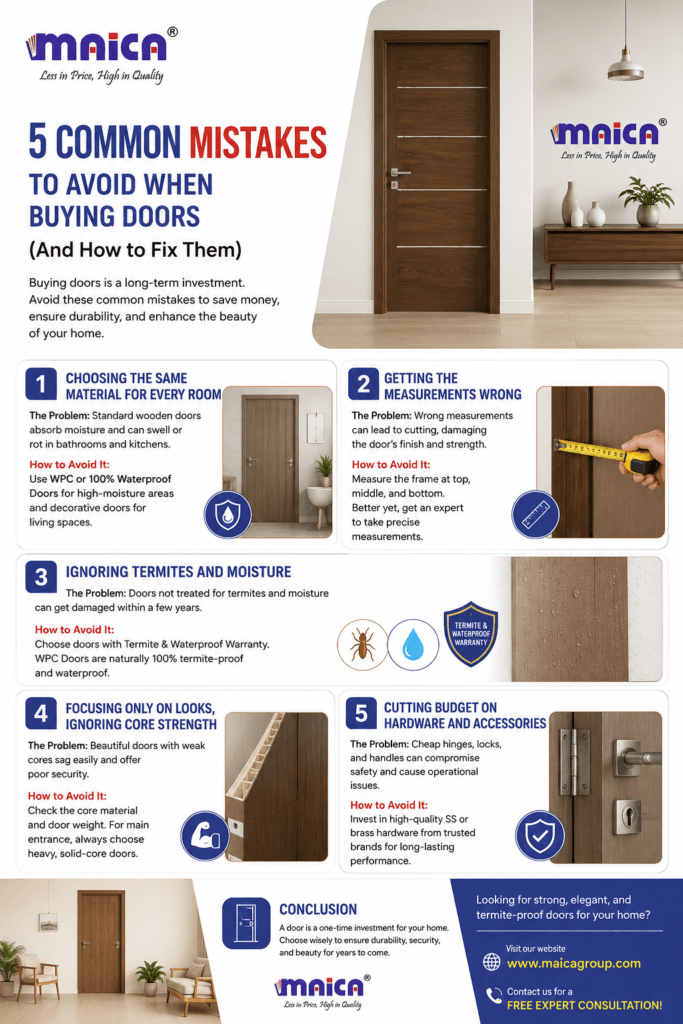
Mistake 1 – Using the Same Door for Every Room
This is one of the biggest mistakes people make while constructing a new house.
Many homeowners select one design and install the same type of door throughout the entire home because it looks uniform and feels convenient.
But every room has different conditions.
A bedroom door and a bathroom door cannot perform the same way.
What Goes Wrong?
Traditional wooden doors absorb moisture in bathrooms and kitchen areas. Over time, they start swelling, bending, and losing their finish. In humid Indian weather, this problem becomes even worse.
You may notice:
- Doors getting jammed
- Edges expanding
- Peeling laminate
- Bad odor due to moisture
- Termite attacks
What You Should Do Instead
Choose the door material according to the room.
For bathrooms, kitchens, and wash areas, waterproof options like WPC doors are much safer and more durable. They do not absorb water and remain stable for years.
For bedrooms and living rooms, you can choose decorative flush doors or designer laminated doors based on your interior theme.
A smart homeowner never buys doors only for appearance — they buy according to usage.
Mistake 2 – Taking Wrong Measurements
Many people measure door openings casually with a tape and place the order immediately.
Later, when the doors arrive, problems begin.
Why Is This a Big Problem?
Even a small measurement mistake can ruin the entire fitting.
If the size is slightly bigger or smaller:
- Carpenters start cutting the edges
- Factory finishing gets damaged
- Door strength becomes weak
- Gaps appear after installation
- The final look becomes uneven
Once a finished door is cut improperly, it never looks premium again.
The Right Way to Measure
Always measure the frame from:
- Top
- Middle
- Bottom
Sometimes walls are not perfectly straight, especially in Indian construction sites.
The safest option is to ask the manufacturer or dealer to send an expert for professional measurements before production starts.
That small step can save you from major installation issues later.
Mistake 3 – Ignoring Termite and Moisture Protection
In India, termites and humidity are very common problems, especially during monsoon seasons.
Still, many buyers focus only on shiny laminates and exterior appearance.
What Happens Later?
After a few years:
- The inner wood starts getting hollow
- Termites spread inside the frame
- Doors become weak and unsafe
- Moisture damages the edges
And then homeowners are forced to replace everything again.
How to Avoid This Problem
Never hesitate to ask these questions before purchasing:
- Is the door waterproof?
- Is it termite-resistant?
- Does it come with a warranty?
- What material is used inside?
Modern WPC doors are becoming popular because they are naturally termite-proof and waterproof. They require very little maintenance and last much longer compared to ordinary wooden doors.
When you invest once in quality, you avoid repeated expenses later.
Mistake 4 – Choosing Looks Over Strength
The market today is full of attractive doors with glossy finishes and stylish textures.
At first glance, many doors look luxurious.
But appearance alone does not guarantee quality.
The Hidden Reality
Some low-cost doors use weak internal material or hollow cores to reduce manufacturing cost.
From the outside, they may look premium.
Inside, they are weak.
Over time, such doors may:
- Bend from the center
- Sag from hinges
- Crack under pressure
- Provide poor security
This becomes especially dangerous for main entrance doors.
What Smart Buyers Check
Always ask about:
- Core material
- Door thickness
- Weight of the door
- Frame quality
A strong, solid-core door may feel heavier, but it gives better durability, sound insulation, and security.
For your main entrance, strength matters more than shine.
Mistake 5 – Saving Money on Hinges, Locks, and Hardware
People often spend heavily on premium doors but purchase cheap hinges and locks to reduce costs.
This creates problems very quickly.
Why Cheap Hardware Fails
Poor-quality hinges cannot properly support heavy doors.
As a result:
- Doors start making noise
- Hinges become loose
- Doors touch the floor
- Locks stop working smoothly
Most importantly, low-grade locks compromise your family’s safety.
What You Should Choose
Always invest in:
- Stainless steel hinges
- Good quality handles
- Trusted locking systems
- Durable accessories
Remember — even the best door becomes useless if the hardware is weak.
A strong door deserves equally strong fittings.
Final Thoughts
A door is not something you replace every year.
It becomes a permanent part of your home and daily life. That is why choosing the right material, taking proper measurements, using durable hardware, and ensuring moisture protection is extremely important.
Instead of focusing only on price or appearance, think about long-term performance.
A good door gives:
- Better safety
- Longer life
- Less maintenance
- Better appearance
- Peace of mind
If you are planning to build or renovate your home, invest wisely and avoid these common mistakes from the beginning.
Explore premium waterproof, termite-proof, and stylish WPC door solutions from Maica Group and find the perfect doors for every space in your home.